Explainer
Buying a Tesla in one country and registering it in another
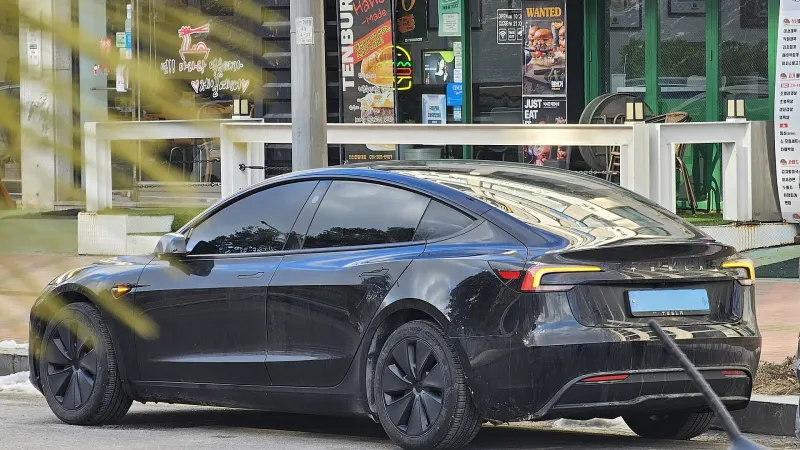
A price difference between two markets looks like free money until you add registration tax, and then it usually isn't. Here is the honest map of what actually transfers across a border and what doesn't — the one question a single-market referral site structurally can't answer.
The four things that decide whether it is worth it
Ignore the sticker prices for a moment. Cross-border buying is decided by four line items, and only one of them is the price of the car.
1. VAT — where it lands, not whether you pay it
Inside the EU, a genuinely new vehicle is taxed in the country of destination. That is the "new means of transport" rule, and it exists precisely so that buyers can't shop for the lowest VAT rate. The seller should not charge VAT; you account for it when you register at home. Whether your car counts as new is defined by age and distance travelled, and a demonstrator can fall on either side of the line.
Crossing an EU external border — into or out of the UK, for instance — is a different mechanism again: customs entry, duty and import VAT, each with its own paperwork.
2. Registration tax — the line that usually decides it
This is where cross-border arbitrage goes to die. Several markets levy a substantial vehicle-registration or first-registration tax that is charged wherever the car ends up, regardless of where it was bought. It is set nationally, it is often weight- or emissions-based, and it can comfortably exceed any price difference between two showrooms.
Look it up for your destination country before anything else. If the number is large, the rest of this article is academic.
3. The Certificate of Conformity
Within the EU, a vehicle with whole-vehicle type approval comes with a Certificate of Conformity — the document that lets a registration authority in another member state accept it without individual approval. Get it in your name, in a language your authority accepts, and get it before the car moves. Chasing paperwork across a border after the fact is the single most common source of delay.
Outside the EU there may be no equivalent shortcut, and the car may need individual approval, which is slower and can require modification.
4. Specification, which is not the same everywhere
Drive side is the obvious one. Less obvious: charging connector standards, headlight beam pattern, and which driver-assistance features are enabled by regulation in the destination market. A car built for one market is not always legal, or fully functional, in another — and a feature disabled by regulation is not a fault your warranty will address.
What happens to the referral benefit
This part is simple and worth stating clearly, because it is asked constantly. The referral benefit attaches to the order, in the market where the order is placed, at the moment you pay. That means:
- Ordering in a market whose benefit is a Supercharging credit and then registering the car elsewhere does not convert it into another market's benefit.
- Moving the car later does not create a new opportunity to attach one.
- The benefit is held on your Tesla account, so it survives the move — it just doesn't change shape.
Which market's benefit is which is exactly what our country pages exist to answer, and it is worth checking before you decide where to order rather than after.
Warranty and service across a border
Manufacturer warranties for vehicles sold within the EU are generally honoured across the network, but the practical questions — which service centre, what happens with a market-specific part, whether any market-specific software feature is supported — deserve a written answer rather than an assumption. Ask before you buy, and keep the reply.
Note also that your consumer-law rights run against the seller, in the seller's jurisdiction. That is a meaningful difference from the warranty, and it is the thing that becomes awkward at distance: a dispute with a seller two countries away is a materially harder dispute than one with a seller down the road.
The order to work through it
- Look up the destination country's registration tax. If it is large, stop.
- Confirm whether the car counts as new for VAT purposes, and therefore where the VAT is due.
- Confirm the Certificate of Conformity is available and in your name.
- Check the specification against destination requirements.
- Only now compare the two prices — and compare the totals, not the stickers.
- Check which market's referral benefit you'd be getting, on the relevant country page.
Related: what the benefit is worth by country · charging without a driveway, by country.
Questions this raises
Do I pay VAT twice if I buy an EV in another EU country?
No. Under the EU's 'new means of transport' rule, VAT on a genuinely new vehicle is due in the country where it will be registered, not the country of sale — so the seller should not charge it and you account for it at home. The definition of 'new' is time- and distance-based, so check where your car sits against it before assuming.
Does the referral benefit follow the car across a border?
The benefit is set by the market the order was placed in, and it attaches to your Tesla account at checkout. Moving the car afterwards does not convert one market's benefit into another's.
Related reading
- How-toHow to apply a Tesla referral code at checkout (2026, step by step)
- ExplainerTesla referral code vs referral link — what's the difference?
- ComparisonWhat a Tesla referral code is worth by country in 2026
Pillar: By country. Program facts verified July 13, 2026; sources are linked from each country page and the footer.